Opening the Hood of the Internet
There was a time when the web felt like a giant puzzle, and I wanted to be the one to help people piece it together. That is why I started InfoBeats.org. It wasn’t just a website; it was a dedicated portal where I shared the basics of web design and all the little “tricks” I had picked up along the way.
Back then, if you wanted to add something as simple as a digital clock or a bit of interactive flair to a page, you usually had to hunt through messy forums. I wanted to create a clean, organized space where those building blocks were easy to find and even easier to understand.
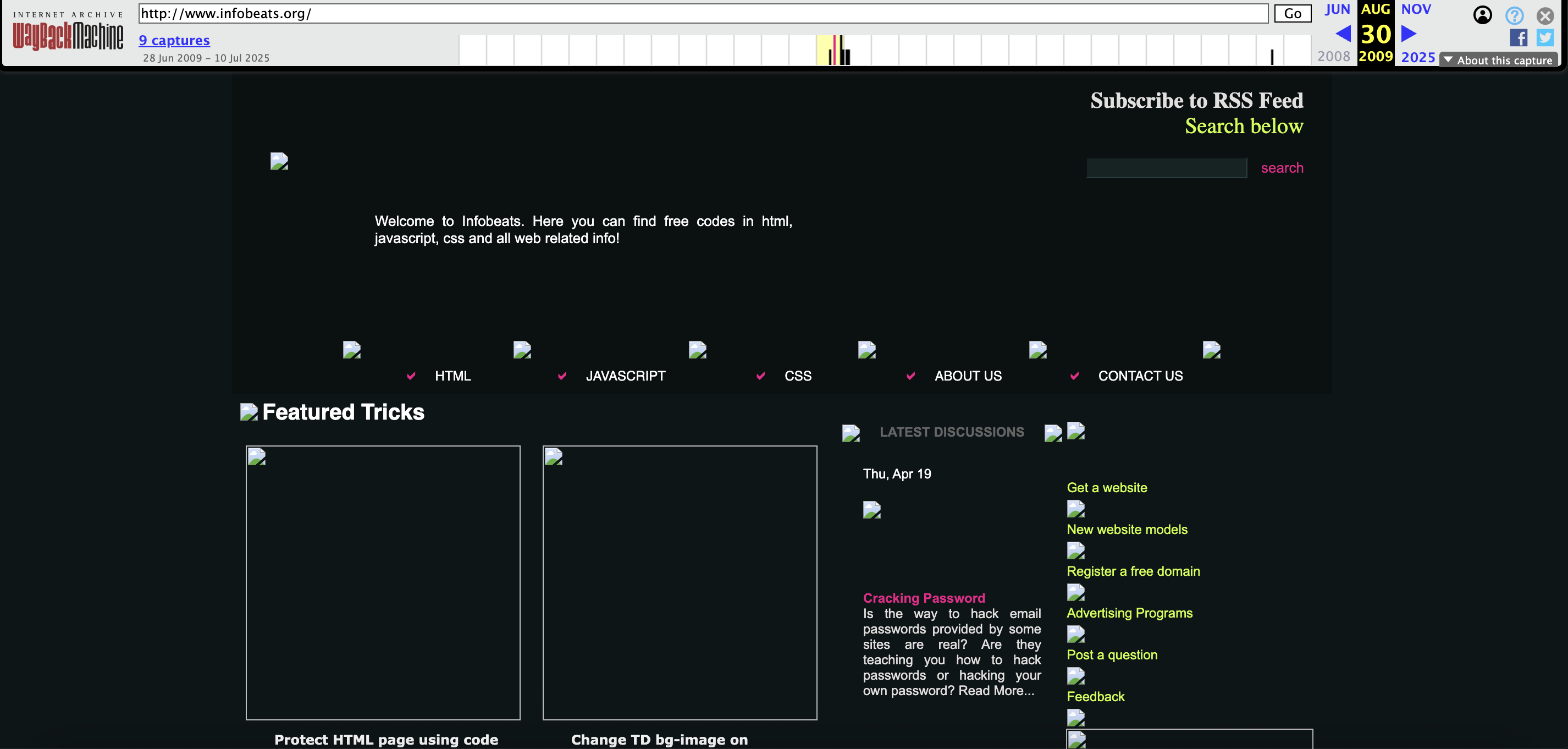
![Screenshot Placeholder: The original InfoBeats layout with its signature dark theme and ‘Featured Tricks’ list]
The Joy of a Good ‘Trick’
I spent a lot of my time writing tutorials for things that felt like magic at the time. Whether it was a snippet of JavaScript or a clever CSS layout, I loved breaking down the code into something anyone could use.
The “Featured Tricks” section was the heart of the site. I would post guides on everything from protecting a page with a code encryptor to creating custom image slideshows. It was incredibly rewarding to see someone take a piece of code I had shared and use it to build something of their own.
- Practical Tutorials: Real-world guides for HTML and JavaScript.
- Featured Tricks: Simple snippets to add personality to any site.
- Shared Knowledge: Making the technical side of the web accessible to everyone.
Looking Back at the Archive
Checking the archives now, I’m reminded of how much I enjoyed the “do-it-yourself” spirit of those days. We weren’t just browsing the web; we were active participants in creating it.
InfoBeats was my way of contributing to that community. It taught me that sharing what you know is one of the best ways to connect with others, and I still carry that philosophy with me today.